
Volunteering on the River Dee
Volunteer with us!
There are many opportunities to volunteer with the Trust, with activities available throughout the year. Seasonal opportunities include tree planting in the cooler months, building eel ropes in spring, and removing invasive riverside plants during the summer. We also run year-round volunteering activities such as building debris dams, removing historic tree tubes, and tackling the ever-present issue of plastic pollution in our rivers.
All volunteering activities are closely linked to the Trust’s strategic and operational objectives and take place in the stunning catchments of the Rivers Dee and Don.
Look out for our quarterly volunteering days, which are open to everyone. If you would like to learn more about volunteering or be kept up to date with forthcoming dates, please contact us.
We also offer a range of exciting corporate volunteering and team-building opportunities. These are currently ring-fenced for organisations that support us through our River Dee Guardian scheme or act as educational funders. To learn more about supporting the River Dee Trust, please contact claire@riverdee.org
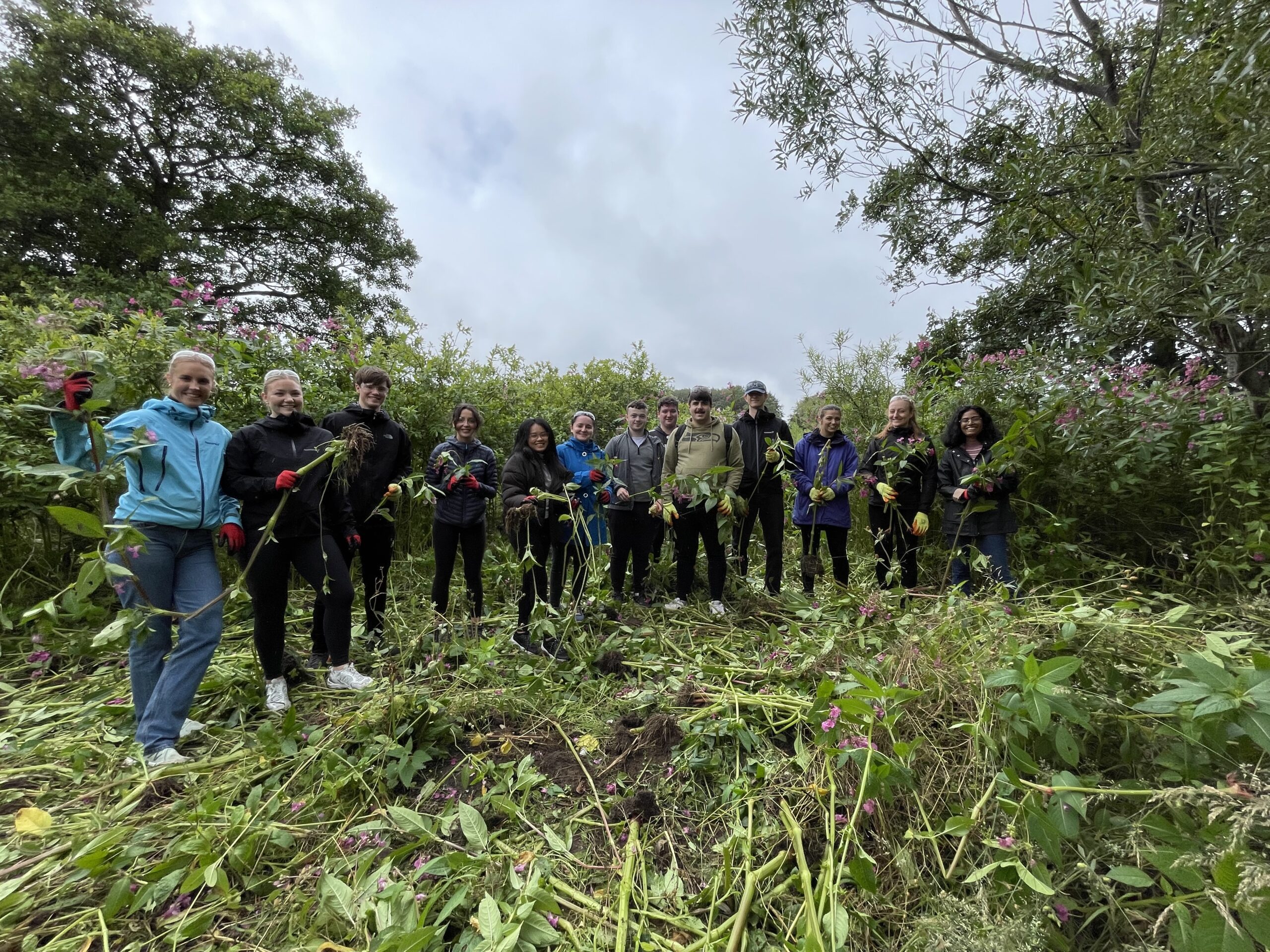
Volunteer opportunities with our INNS team
- Working with our team to remove Invasive Plants such as Himalayan Balsam and American Skunk Cabbage, mainly in the middle and lower Dee from May- August. Suitable for Groups
- Woking with our team to remove Giant Hogweed, you will require more extensive training for this, and we can provide PPE, April and May.
- Monitoring rafts for American Mink on the Dee Catchment, from March onwards.

Volunteer opportunities for our river restoration projects
These are in the middle and upper catchment above Aboyne Bridge up to the Braemar area.
- Plant some trees as part of our One Million Trees campaign, these are small saplings and not large trees, so you require a general level of fitness only. We plant trees in the colder months from November to the end of April annually. Suitable for Groups
- Tree tidy up, we have discarded tree guards that we need to collect to reuse them or send them to be recycled as part of a UK-wide scheme. March – October. Suitable for Groups
- Building debris dams on small streams, suitable for small groups only. Small Groups
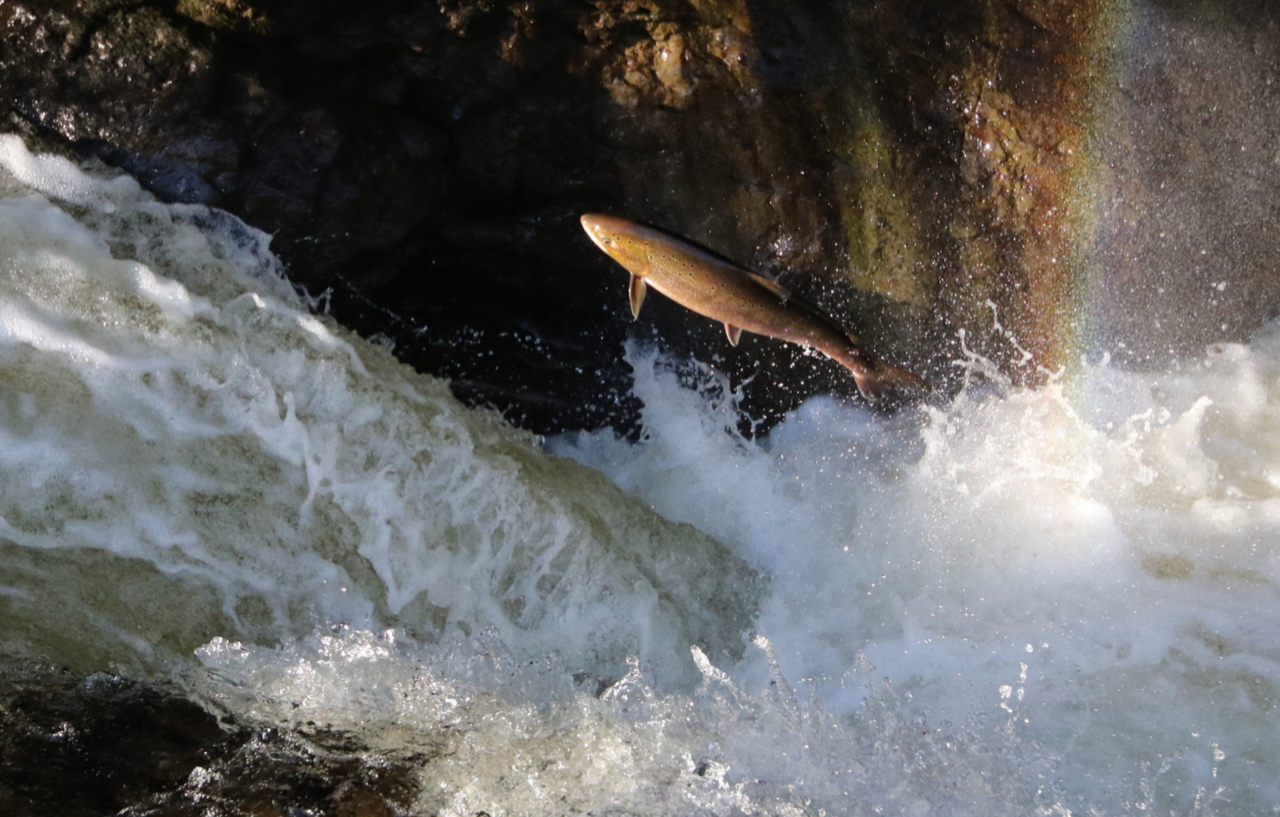
Volunteer opportunities to protect wild Atlantic Salmon
- If you live near the lower part of the Dee and are available early mornings then we do smolt shepherding, this requires a small amount of training and is designed to scare birds away from small fish migrating to sea from the river, using non-lethal means. April and May annually.
To find our more please e mail Claire@riverdee.org
Please note we have limited availability for volunteer opportunities.
Meet the volunteers

Callum
How long have you volunteered with RDT?
I started volunteering with RDT around 2020, monitoring a mink raft on the River Feugh. I completed training in 2022 and have since helped with invasive species control across the Dee and Don catchments, native tree planting and even a spot of electro-fishing.
Why do you volunteer?
I’ve always loved rivers and the things that live in and around them. Seeing the decline of native species makes me want to help, and it’s satisfying to watch invasive plants retreat while native habitats recover. You can really enjoy your coffee after that.
What has been the best part of being a volunteer?
Volunteering is good exercise, good company and a good cause. The real highlights are those rare encounters with an otter or a kingfisher that carries on as if you’re not there. I like that.

Alan
How long have you volunteered with RDT?
I first volunteered with the River Dee Trust in 2016, and more frequently from 2019. I’ve lived most of my life near rivers of varied quality and now I put some effort into maintenance and restoration.
Why do you volunteer?
Treating invasive plants, tree planting, fence maintenance, mink trap monitoring, and litter picking takes me to remoter parts of beautiful rivers I wouldn’t normally visit.
Everything and everyone benefits from control of invasive species. I benefit from fresh air, exercise, jokes both good and bad, and the occasional biscuit.
What has been the best part of being a volunteer?
All River Dee Trust volunteers contribute on their first visit, on any activity, and can build knowledge and skills from there onwards.
Frequently asked questions
Hidden to keep closed
What are the benefits of volunteering?
Volunteering is a great way to explore new places, often we are working in areas off the beaten path. It’s also a great way to try something new, learn new skills and meet likeminded people.
Volunteering in the outdoors also helps support physical and mental wellbeing.
Do I need previous experience?
Not at all! Our friendly team is on site to guide you through any activities. We always give demonstrations at the start of the session, and with the likes of invasive species removal, will show you examples of the different plants we might come across and how to identify them. All you need is enthusiasm!
Do you have a minimum volunteering age?
Our minimum general volunteering age is 16, but for activities that require entry to the water, the minimum age is 18. During our quarterly volunteering days, which can sometimes fall within school holidays, younger volunteers are welcome to join under the supervision of an adult. Some activities are unsuitable for children under a certain age, either due to the location we will be working or the tools being used, for which the organising team can advise you upon registration.
Hidden to keep closed
Your content goes here. Edit or remove this text inline or in the module Content settings. You can also style every aspect of this content in the module Design settings and even apply custom CSS to this text in the module Advanced settings.
What do you provide?
We provide all equipment and PPE for the task such as safety glasses and gloves (though you are welcome to bring your own gardening gloves or work gloves if you prefer). Every volunteer day also has a first aider present and first aid kits on site.
We will also give a health and safety breifing at the start of the session, and share the risk assessment for the activity with you in advance.
What should I wear?
When you register for a volunteering activity, one of the team will be in touch with any specific details on what to wear for the day. Generally outdoor clothing that is suitable for the weather (i.e. waterproofs / sunhats) and sturdy footwear such as hiking boots or wellington boots are always great when working beside the river. In the summer months, we often recommend long sleeves and trousers to keep you protected from the likes of long vegetation, stinging nettles and potential ticks.
What should I bring?
As above, when you register for a volunteering activity, one of the team will be in touch with any specific details on what to bring with you for the day. Bring plenty of water, any personal medication you need, snacks and things like sun cream with you, and for full day activities remember to bring a packed lunch. The team always have teas, coffees and biscuits on hand too!